MEET
THE
LIONFISH
A Lethal Invader
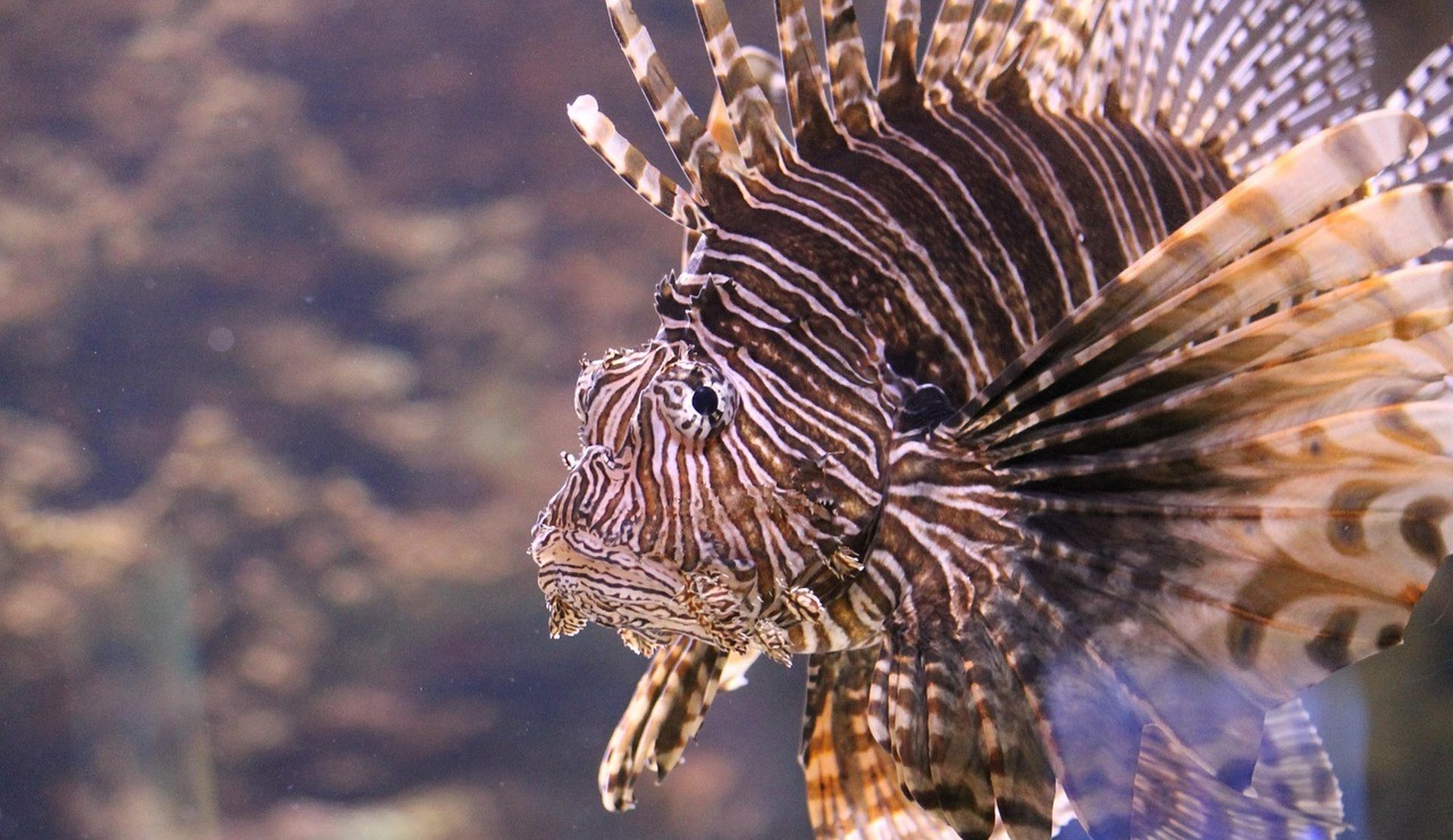
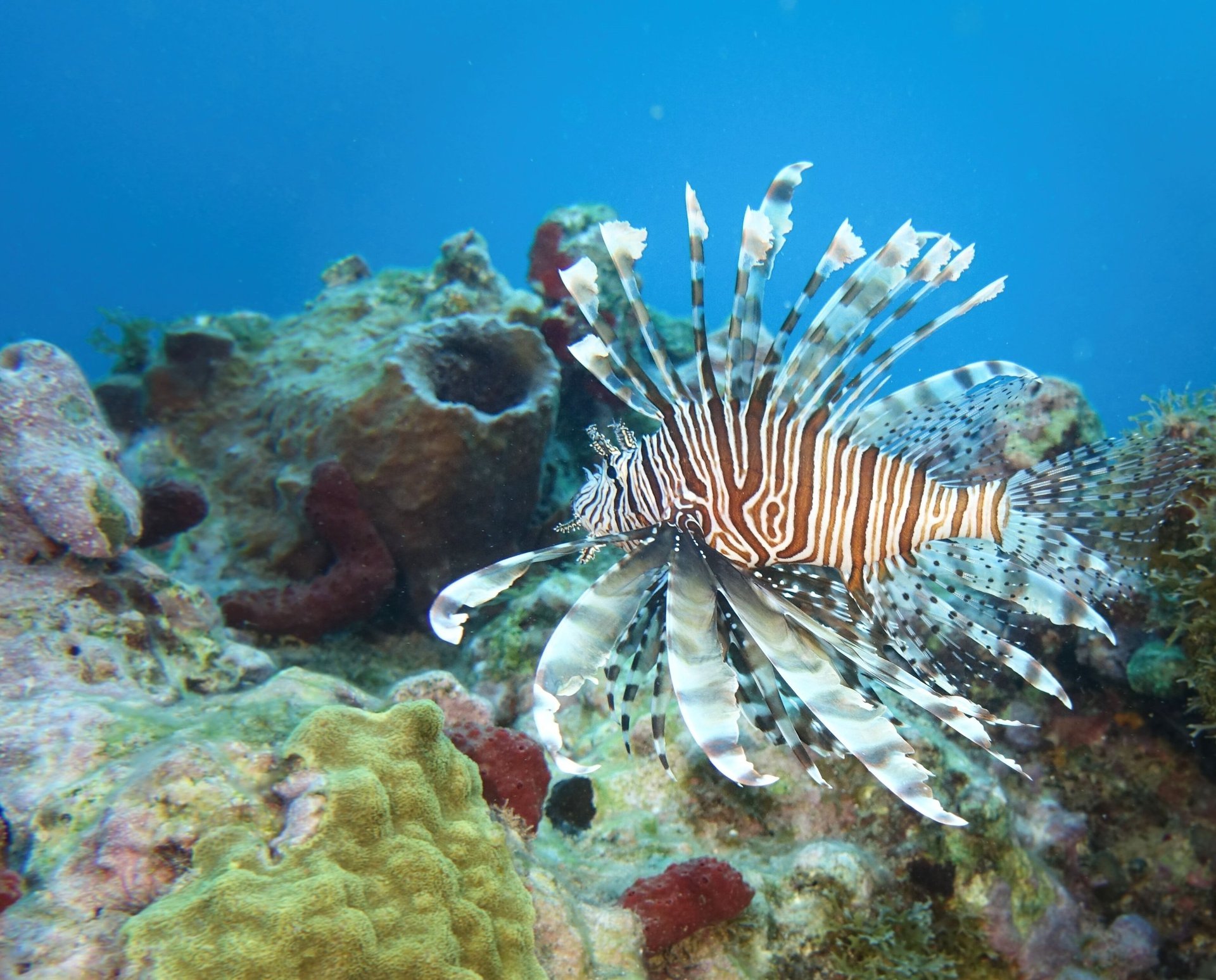
The lionfish is one of the most striking fish you’ll ever see underwater. Slow, elegant, almost hypnotic. But in the Caribbean, this beauty comes at a high cost. Lionfish are not native here. And their presence is reshaping reef ecosystems at a pace few people realize.
Where Lionfish Belong — and Where They Don’t
Through human activity, they were introduced to the Western Atlantic and have since spread widely.
Today, lionfish are invasive across the Caribbean Sea, the Gulf of Mexico, the western Atlantic from Florida to North Carolina, and along parts of the northern South American coast, with recent expansion into Brazil.
In these regions, the absence of natural controls allows their numbers to grow unchecked, placing sustained pressure on reef ecosystems.
They reproduce year-round, spread rapidly, and consume large numbers of young reef fish before those fish ever get a chance to grow.
On reefs already stressed by warming waters, pollution, and overfishing, this added pressure can be devastating.
Beautiful. Invasive. And degrading Caribbean reefs faster than they can recover.
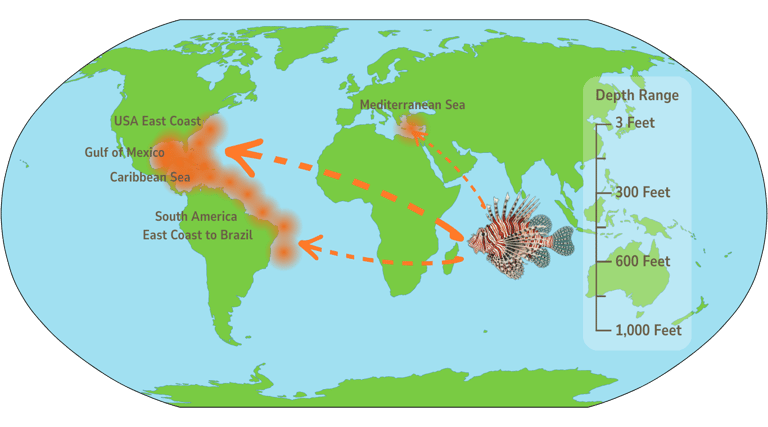
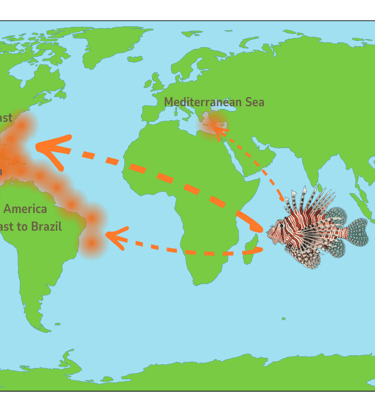
Lionfish are native to the Indo-Pacific, where their populations are naturally regulated by predators and ecological balance.
A Serious Threat
A fast-spreading predator stripping reefs of their next generation.
Lionfish are invasive predators with no natural controls in the Caribbean.
About half of all lionfish are female, and each female can release up to 20,000 eggs every 3–5 days — adding up to around 2 million eggs per year.
The Numbers Behind The Problem
When numbers speak louder than words...


Lionfish are known to consume more than 50 species of fish and invertebrates.
Lionfish prey heavily on herbivorous fish that feed on algae. Without them, algae overgrow, smother corals, and weaken the reef.
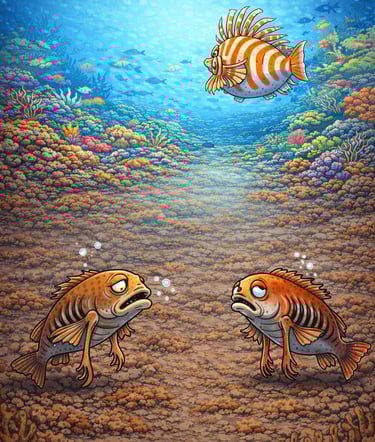
At the same time, with fewer small fish left, native predators such as snappers and groupers are left with less food.
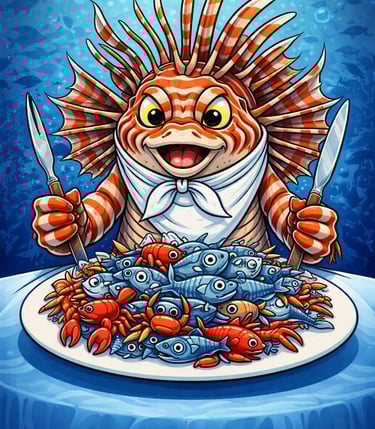
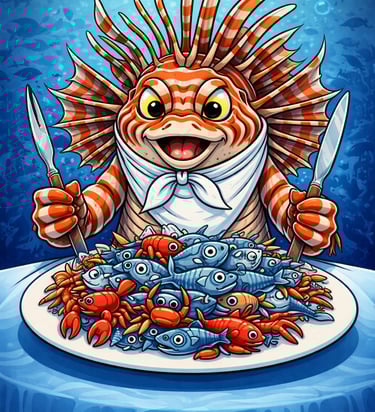
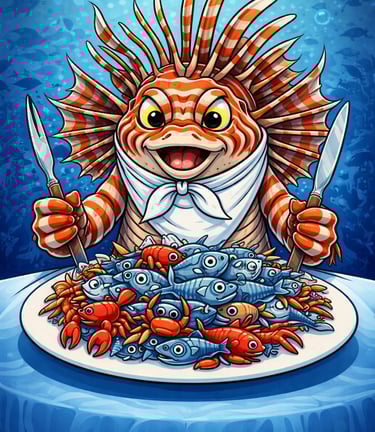
Rapid Reproduction + Broad Prey Range + No Natural Predators
=
A Highly Effective Invader
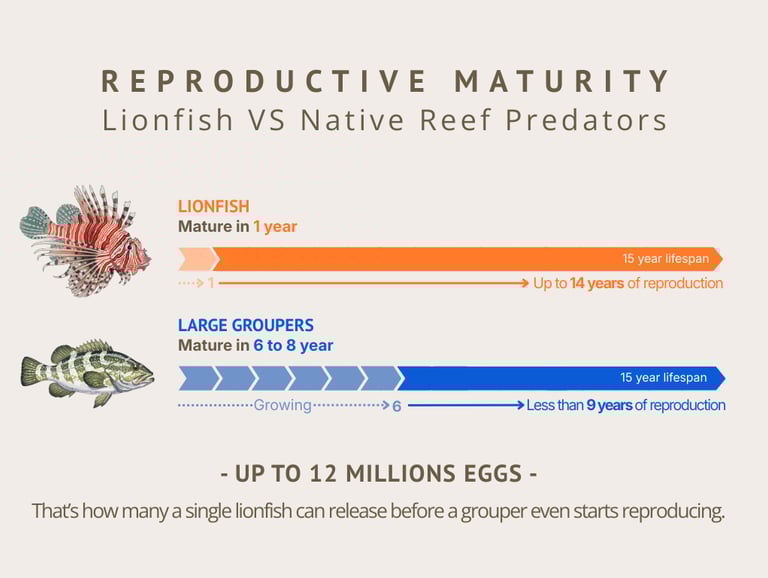
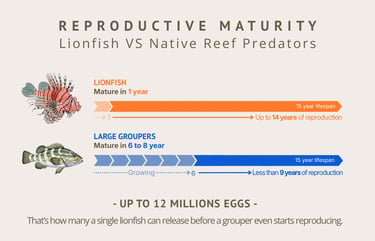
Lionfish can live up to 15 years and begin reproducing in about one year, far earlier than many native predators. At the same time, they feed heavily on fish juveniles and other creatures essential to a healthy reef. This means lionfish not only reproduce faster, but also directly reduce the reproductive success of other reef fish by removing the next generation before it can mature.
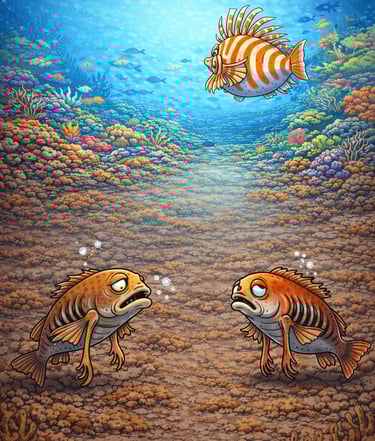
Why the Lionfish Invasion Is So Effective
Lionfish release buoyant egg masses that drift with ocean currents, allowing larvae to spread over long distances and colonize new reefs. At the same time, adult lionfish occupy an unusually wide depth range—from shallow waters around 3 feet to deep reefs beyond 1,000 feet—well beyond the recommended diving limit of 130 ft (40 m), placing them out of reach of recreational divers.
Together, wide dispersal and full-depth presence explain how lionfish establish themselves so quickly. In just over 25 years, since first being recorded off Florida in 1998, lionfish have spread from Massachusetts to Brazil, and even into the Mediterranean, with populations continuing to expand rapidly across invaded regions.
Lionfish spread both horizontally with currents and vertically across the reef.


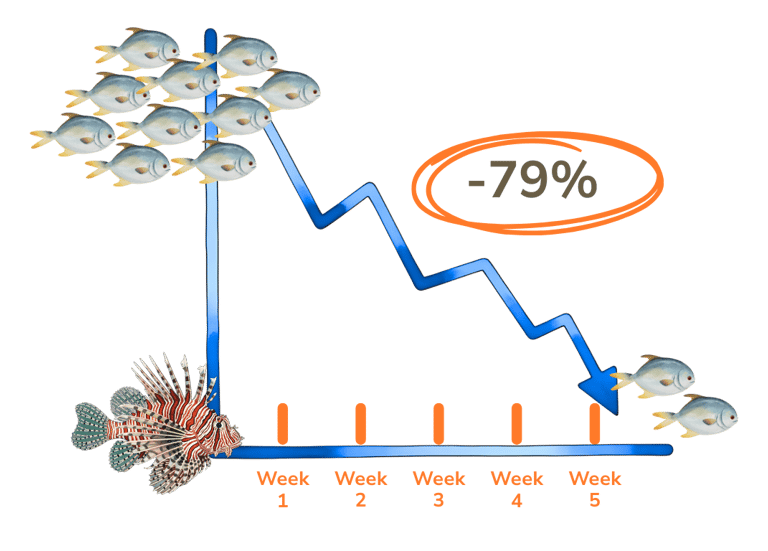
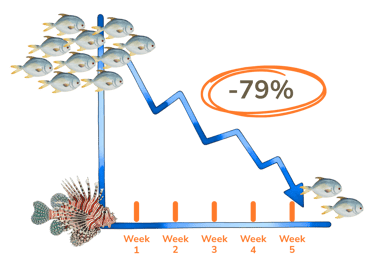
One single lionfish can reduce juvenile reef fish biomass by up to 79% in under 5 weeks on a small reef patch (Albins & Hixon, 2008).
Lionfish can expand their stomachs by up to 30 times, allowing them to consume remarkable amounts of prey.
They can eat up to 3% of their body weight every day — the equivalent of a 175-pound person eating about two whole chickens daily, or around 750 chickens in a year.
A single lionfish may consume up to around 40,000 prey over its lifetime.
By the time a grouper reaches maturity, a lionfish may already have released 12 million eggs.
Protect Caribbean reefs — support the fight against lionfish
Removing Even One Lionfish Matters
We do what we can, where we can — to help turn the tide
Removing even just one lionfish triggers a domino effect with real benefits for reefs.
Explore our gallery. What you’ll see there is what motivates our work
Lionfish were introduced through human activity. Today, humans are also the only effective predators capable of controlling their numbers in the Caribbean.
Targeted removals by trained divers remain the most effective way to slow the invasion and give reefs breathing room. But they can’t do it alone. Control only works when the whole system supports it — from sea to shore.
TTT Above and Below the Surface
Lionfish cannot be eradicated from the Caribbean. What is possible is reducing pressure—reef by reef, within human limits. Targeted action helps protect native species and buy time for ecosystems already under stress.
You don’t need to remove hundreds of them to make a difference
In their own way, everyone can contribute to reef protection
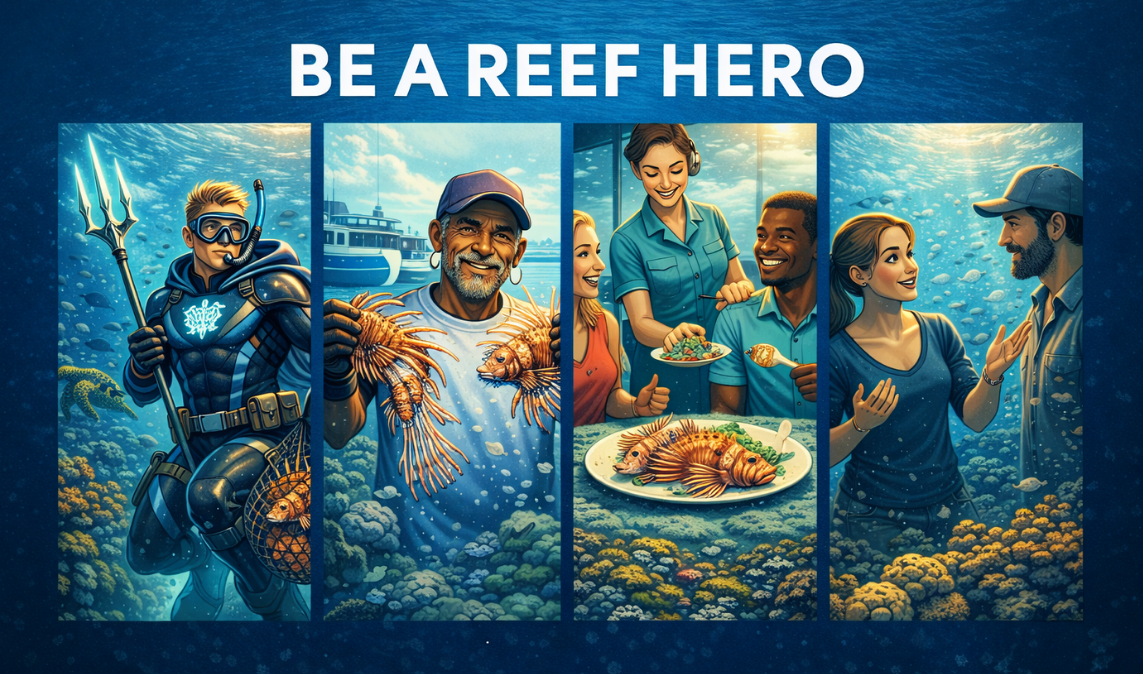
Every Action, Even a Small One Can Make a Difference
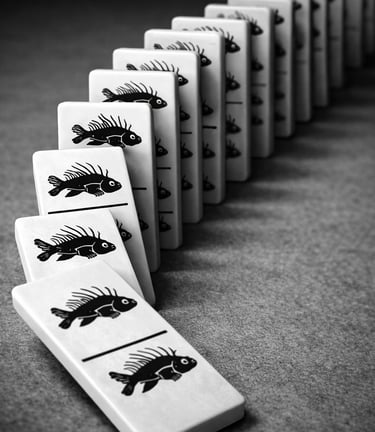
It immediately reduces predation on juvenile reef fish.


More juveniles survive — including herbivores that graze algae.
With algae kept in check, corals can breathe, grow, and recover.
Surviving reef fish and invertebrates can reach maturity and reproduce.
Healthier corals support more shelter, more food, and more native life.
The impact is local, measurable, and immediate.
And millions of lionfish eggs that would have entered the system never exist.


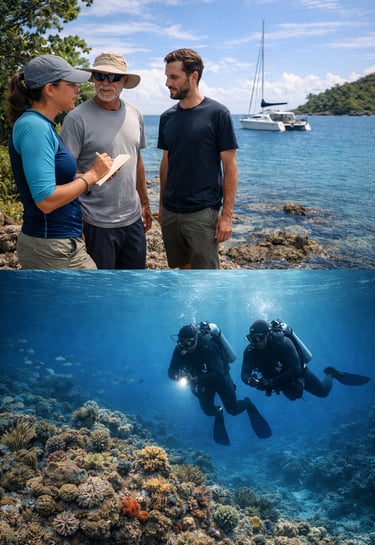
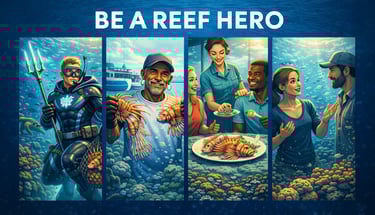
If you are a diver, learning to safely and responsibly remove lionfish directly reduces pressure on reefs.
If you are a fisher, landing and sharing lionfish helps create demand and normalize them as a food fish.
If you are a local resident or visitor, choosing lionfish on the menu actively supports control efforts.
If you talk about the issue, you help spread understanding and build long-term awareness.
Whether in the water, on the dock, at the table, or in conversation — every action adds up, and together they give reefs a fighting chance.
🤿 Field Work, Dive After Dive
At Turn The Tide (TTT), we work underwater site by site, returning repeatedly to the same reefs. Our efforts also extend beyond the water through discussions and information sharing with boaters, local communities, and authorities.
⚖️ Guided by Responsibility
Everything we do is guided by responsibility—to the reef, to the species that depend on it, and to the people who rely on these ecosystems. Our dives are not sport or performance, but careful, deliberate intervention.
📋 Our Approach in Practice
Selective removals using low-impact techniques that leave the reef untouched
Repeated site visits to limit reinvasion over time
Clear documentation of what is removed, where, and when
Collaboration with biologists and authorities to inform management decisions
Community engagement to raise awareness and support long-term control
⏳ Why It Matters Now
Lionfish control is only one piece of reef conservation—but it is one of the few actions available today with visible results. It doesn’t solve everything. But it buys reefs time—and time matters.
We can’t save every reef—but we can give many a fighting chance.
MEET
THE
LIONFISH
A Lethal Invader
The lionfish is one of the most striking fish you’ll see underwater—slow, elegant, almost hypnotic. But in the Caribbean, this beauty comes at a high cost. Lionfish don’t belong here, and their presence is reshaping reef ecosystems faster than most people realize.
Through human activity, lionfish were introduced to the Western Atlantic and spread rapidly.
Today, they are invasive across the Caribbean, the Gulf of Mexico, and the western Atlantic from Florida to North Carolina, with recent expansion into Brazil.
In these regions, the lack of natural controls allows their numbers to grow unchecked, putting constant pressure on reef ecosystems.
They reproduce year-round, spread rapidly, and consume large numbers of young reef fish before those fish ever get a chance to grow.
On reefs already stressed by warming waters, pollution, and overfishing, this added pressure can be devastating.
Beautiful. Invasive. And degrading Caribbean reefs faster than they can recover.
Lionfish are native to the Indo-Pacific, where predators and natural ecosystem balance keep their populations in check.
A Serious Threat
A fast-spreading predator stripping reefs of their next generation.
Lionfish are invasive predators with no natural controls in the Caribbean.
About half of all lionfish are female, and each can release up to 20,000 eggs every 3–5 days — adding up to around 2 million eggs per year.
The Numbers
When numbers speak louder than words...

Lionfish consume over 50 species of fish and invertebrates.
By preying on herbivorous fish that control algae, they allow algae to overgrow and smother corals.
With fewer small fish left, native predators like snappers and groupers also lose critical food sources.
Lionfish can expand their stomachs by up to 30 times, allowing them to consume remarkable amounts of prey.
They can eat up to 3% of their body weight every day — the equivalent of a 175-pound person eating about two whole chickens daily, or around 750 chickens in a year.
A single lionfish may consume up to around 40,000 prey over its lifetime.
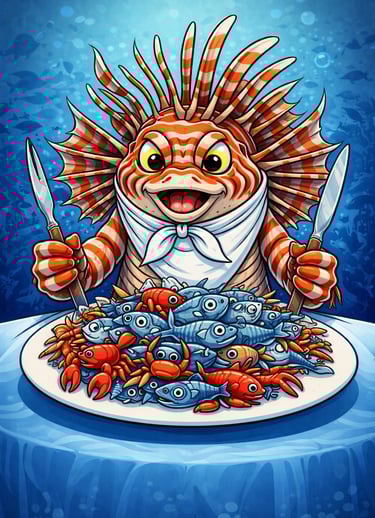
Rapid Reproduction + Broad Prey Range + No Natural Predators
=
A Highly Effective Invader
Lionfish can live up to 15 years and begin reproducing in about one year—much earlier than many native predators. By feeding heavily on fish juveniles and other creatures essential to a healthy reef, they not only reproduce faster but also eliminate the next generation of reef life before it can mature.
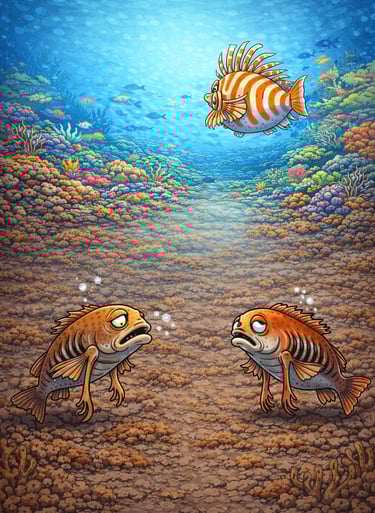
Why the Lionfish Invasion Is So Effective
Lionfish release buoyant egg masses that drift with ocean currents, allowing larvae to spread over long distances and colonize new reefs.
At the same time, adult lionfish occupy an unusually wide depth range—from 3 feet to 300 feet—well beyond the recommended diving limit of 130 ft (40 m), placing them out of reach of recreational divers.
Lionfish spread both horizontally with currents and vertically across the reef.
One single lionfish can reduce juvenile
Where It Belongs — and Where It Doesn't
(Albins & Hixon, 2008).
fish biomass by up to 79% in under 5 weeks on a small reef patch.
Behind The Problem
By the time a grouper reaches maturity, a lionfish may already have released 12 million eggs.
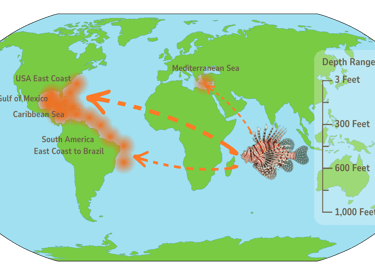
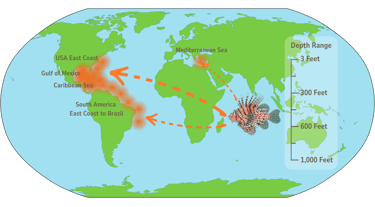
Together, wide dispersal and full-depth presence explain how lionfish establish themselves so quickly.
Protect Caribbean reefs — support the fight against lionfish
Even One Lionfish Matters
We do what we can, where we can, and how we can — to actively turn the tide.
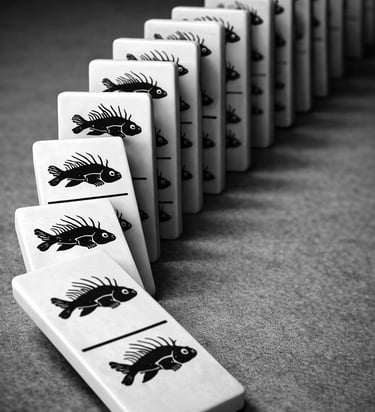
Removing even just one lionfish triggers a domino effect with real benefits for reefs.
Explore our gallery and discover the reefs that motivate our work.
Today, humans are the only effective predators capable of controlling lionfish in the Caribbean
Targeted removals by trained divers remain the most effective way to slow the invasion and give reefs breathing room. But control only works when action extends beyond the dive.
Above and Below the Surface
Lionfish cannot be eradicated from the Caribbean. What is possible is reducing pressure—reef by reef, within human limits.
In their own way, everyone can contribute to reef protection.
Every Action Makes a Difference
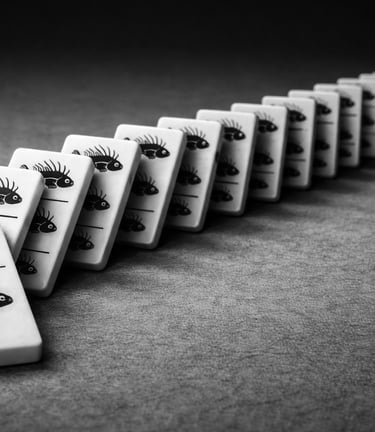

It immediately reduces predation on juvenile fish.

More juveniles survive — including herbivores that graze algae.
With algae kept in check, corals can breathe, grow, and recover.
Surviving fish and invertebrates can reach maturity and reproduce, strengthening coral reefs populations.
Healthier corals support more shelter, food, and reef life.
The impact is local, measurable, and immediate.
And millions of lionfish eggs that would have entered the system never exist.

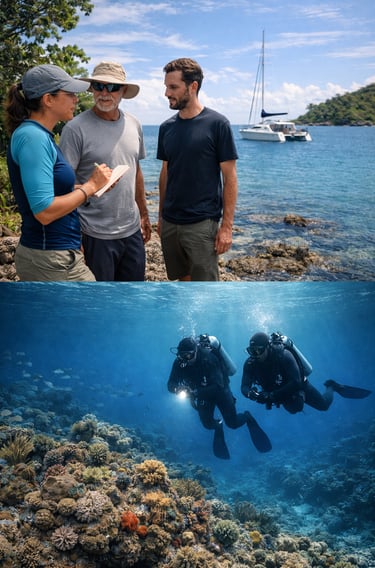
Divers can reduce pressure by learning safe, responsible removal.
Fishers help by landing and sharing lionfish as food.
Residents and visitors support control by choosing lionfish on the menu.
Talking about the issue builds understanding and long-term awareness.
Whether underwater, on the dock, at the table, or in conversation
EVERY ACTION ADDS UP
and helps give reefs a fighting chance.
You don’t need to remove hundreds of them to make a difference.
🤿 Field Work, Dive After Dive
At Turn The Tide (TTT), we work underwater site by site, returning repeatedly to the same reefs. Our efforts also extend beyond the water, through discussions and information sharing with boaters, local communities, and authorities.
⚖️ Guided by Responsibility
Everything we do is driven by responsibility—to the reef, to the species that depend on it, and to the people who rely on these ecosystems. Our dives are not sport or performance, but careful, deliberate intervention.
📋 Our Approach in Practice
Selective removals using low-impact techniques that leave the reef untouched.
Repeated site visits to limit reinvasion over time.
Clear documentation of what is removed, where, and when.
Collaboration with biologists and authorities to inform management decisions.
Community engagement to raise awareness and support long-term control.
⏳ Why It Matters Now
Lionfish control is only one part of reef conservation—but it is one of the few actions available right now with visible results. It doesn’t solve everything. But it buys reefs time—and time matters.
We can’t save every reef—but we can give many a fighting chance!
© 2026 Turn The Tide Foundation Inc. (TTT), a 501(c)(3) public charity. Donations are tax-deductible to the extent permitted by U.S. law.
We work underwater to actively protect Caribbean reefs from invasive lionfish.
© 2026 Turn The Tide Foundation Inc. (TTT), a 501(c)(3) public charity. Donations are tax-deductible to the extent permitted by U.S. law.