
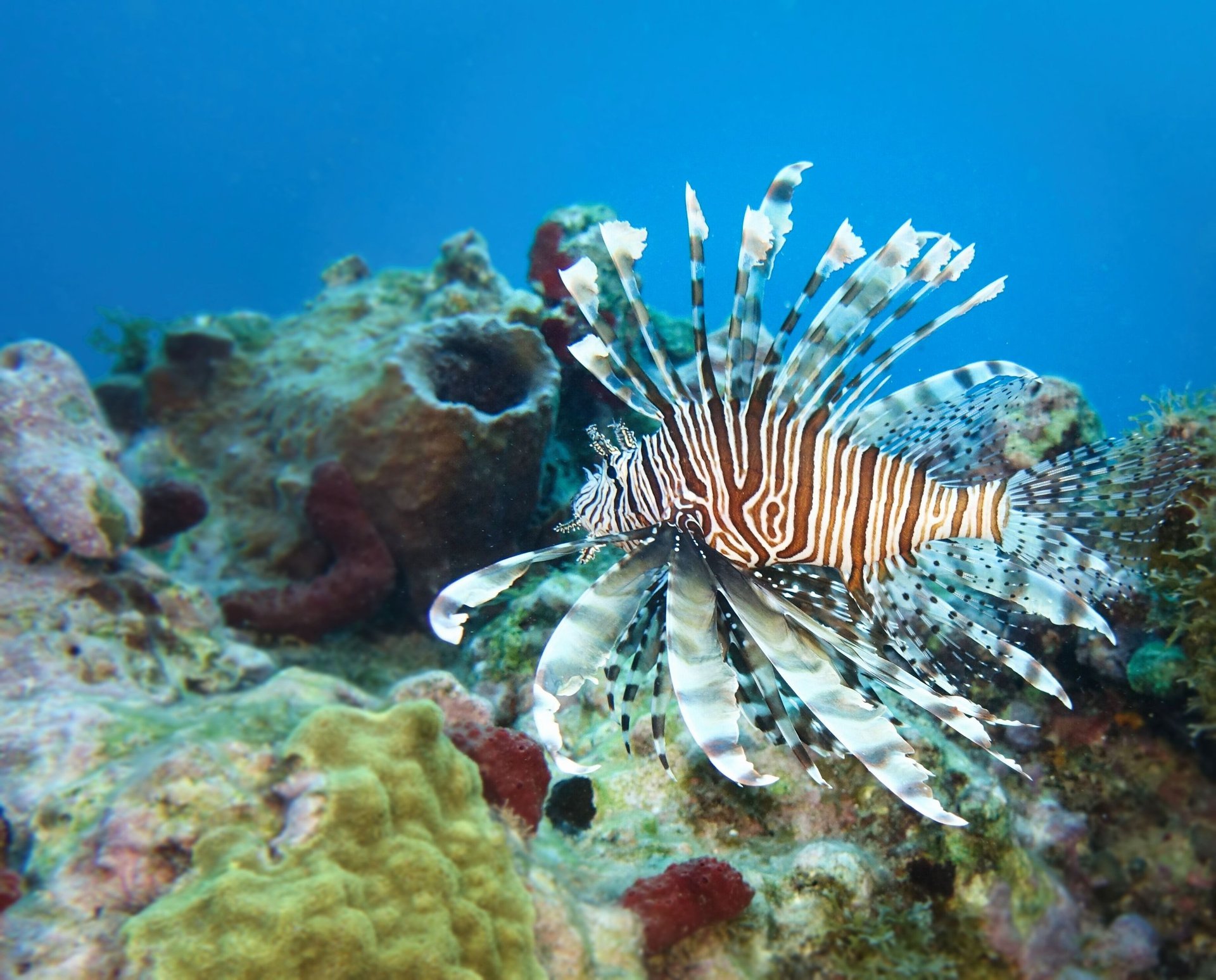
The lionfish is one of the most striking fish you'll ever see underwater. Slow, elegant, almost hypnotic. Its bold stripes and flowing fins make it instantly recognizable and one of the most beautiful fish on a coral reef.
Beautiful • Venomous • Invasive
But there is much more to this fish than its appearance...
You too can be part of the solution. It's within everyone's reach!
Built for Defense
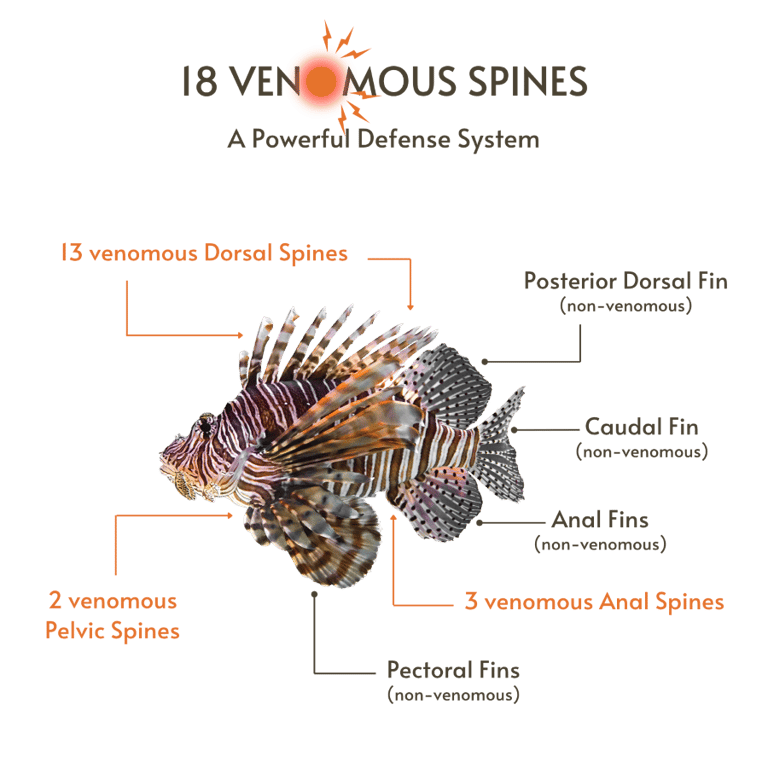
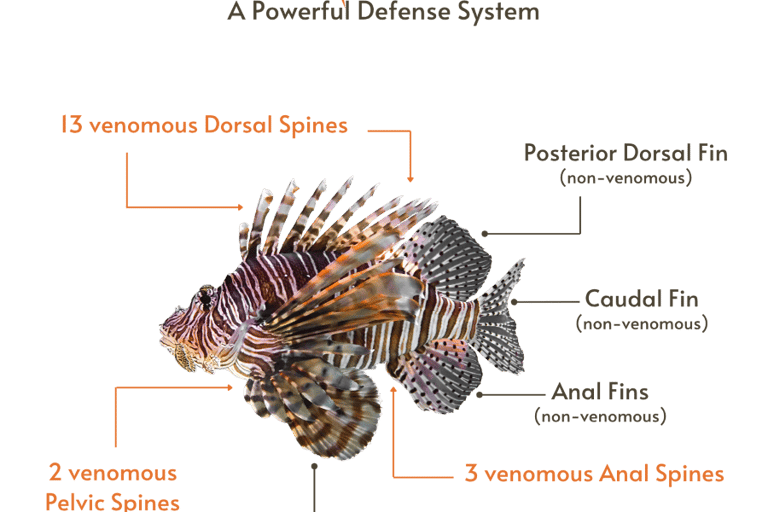
18 venomous spines — One highly effective defense system
Lionfish are protected by 18 venomous spines (13 dorsal, 2 pelvic, and 3 anal). In their native Indo-Pacific range, these spines help deter predators and contribute to the lionfish's survival. Combined with their distinctive warning appearance, they form a highly effective natural defense system.

Not life-threatening to humans but extremely painful
Although capable of delivering a painful sting, lionfish are not aggressive toward people and use their venom strictly for defense. Stings are rarely life-threatening to healthy adults, but they can cause intense pain, swelling, and discomfort that may persist for days.

A Rapid Invasion
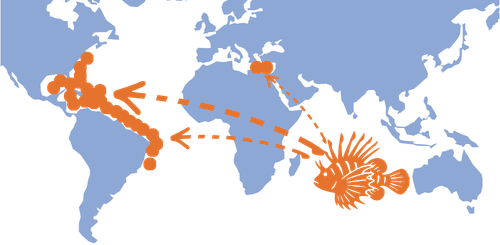
From the Indo-Pacific to the Caribbean
First reported off Florida in the mid-1980s, lionfish are now found throughout:
The U.S. East Coast
The Gulf of Mexico
The Caribbean Sea
Eastern South America
Parts of the Mediterranean Sea
Lionfish belong to the genus Pterois, a group of venomous reef fish native to the Indo-Pacific. Several species exist, but the most commonly found in the Caribbean is the Red Lionfish (Pterois volitans) and occasionally the Devil Firefish (Pterois miles).
Growth at Full Speed
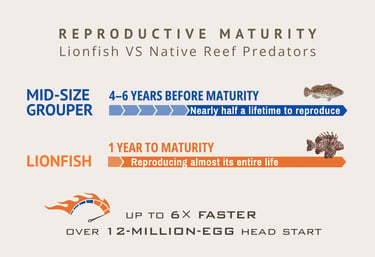
A massive reproductive head start
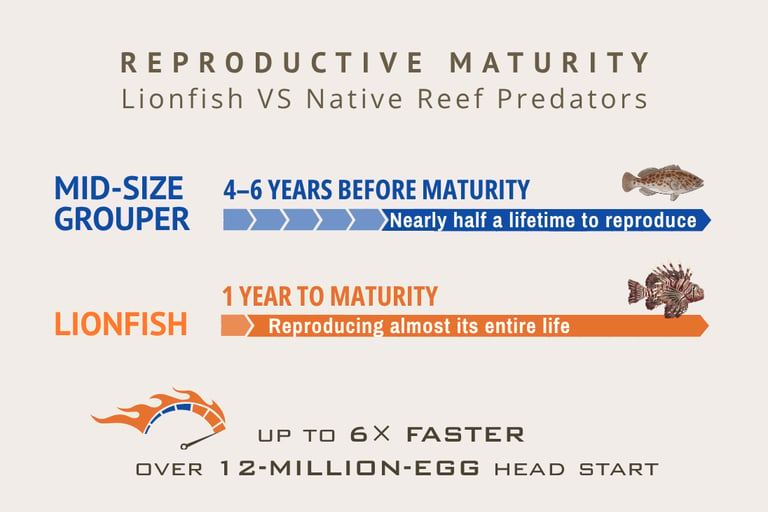
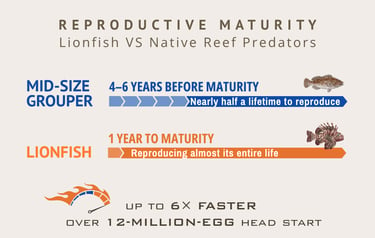
Lionfish reach reproductive maturity in about one year. Many native reef predators take 4–6 years. By the time a medium-sized grouper reaches maturity, a lionfish may already have produced millions of eggs.
Extreme Adaptability
A predator invading nearly any marine environment
From shallow mangroves to deep reefs more than 1,000 feet below the surface, lionfish thrive in an extraordinary range of habitats. Their ability to occupy different depths, temperatures, and ecosystems has played a major role in their rapid spread throughout the Atlantic and Caribbean.
Millions of Offspring
An explosive year-round reproductive cycle
About half of all lionfish are female. Each mature female can release up to 20,000 eggs every 3–5 days—adding up to as many as


This relentless reproductive output is one of the key factors behind the lionfish's extraordinary success.
2 million eggs per year!


An Insatiable Predator
A fast, efficient, and voracious invasive predator
With an expandable stomach and protrusible mouth, the lionfish can swallow prey up to
50%
Lionfish approach slowly, fins spread wide to corner prey…
before a lightning-fast suction strike swallows it whole.
of its size.
Caribbean vs. Pacific lionfish
Thriving in invaded waters
Grow up to
2x faster
Lionfish have adapted exceptionally well to the Caribbean


Become nearly
50% larger
Possibly live
10 years longer
Compared with populations in their native Indo-Pacific range, they appear to grow larger, faster, and potentially live longer.


Before they become reef predators, lionfish begin life as tiny wave surfers
After spawning, females release two floating egg sacs that drift with ocean currents, carrying the next generation across vast distances and onto new reefs.


Now discover why lionfish are a threat to Caribbean reefs
Spread the word, download and share our Lionfish Guide (PDF, 4 MB)
The lionfish is one of the most striking fish you'll ever see underwater. Slow, elegant, almost hypnotic. Its bold stripes and flowing fins make it instantly recognizable and one of the most beautiful fish on a coral reef.
Beautiful Venomous Invasive
But there is much more to this fish than its appearance...
It's within everyone's reach to be part of the solution!
Built for Defense
18 venomous spines — One highly effective defense system
Lionfish are protected by 18 venomous spines (13 dorsal, 2 pelvic, and 3 anal). In their native Indo-Pacific range, these spines help deter predators and contribute to the lionfish's survival. Combined with their distinctive warning appearance, they form a highly effective natural defense system.
Not life-threatening but extremely painful
Although capable of delivering a painful sting, lionfish are not aggressive toward people and use their venom strictly for defense. Stings are rarely life-threatening to healthy adults, but they can cause intense pain, swelling, and discomfort that may persist for days.
A Rapid Invasion
From the Indo-Pacific to the Caribbean
First reported off Florida in the mid-1980s, lionfish are now found throughout:
The U.S. East Coast
The Gulf of Mexico
The Caribbean Sea
Eastern South America
Parts of the Mediterranean Sea
Lionfish belong to the genus Pterois, a group of venomous reef fish native to the Indo-Pacific. Several species exist, but the most commonly found in the Caribbean is the Red Lionfish (Pterois volitans) and occasionally the Devil Firefish (Pterois miles).
Growth at Full Speed
A massive reproductive head start
Lionfish reach reproductive maturity in about one year. Many native reef predators take 4–6 years. By the time a medium-sized grouper reaches maturity, a lionfish may already have produced millions of eggs.
Extreme Adaptability
A predator invading nearly any marine environment
From shallow mangroves to deep reefs more than 1,000 feet below the surface, lionfish thrive in an extraordinary range of habitats. Their ability to occupy different depths, temperatures, and ecosystems has played a major role in their rapid spread throughout the Atlantic and Caribbean.


Millions of Offspring
An explosive reproductive cycle
About half of all lionfish are female. Each mature female can release up to 20,000 eggs every 3–5 days—adding up to as many as
This relentless reproductive output is one of the key factors behind the lionfish's extraordinary success.
2 million eggs per year!
An Insatiable Predator
A fast, efficient, and voracious invasive predator
With an expandable stomach and protrusible mouth, the lionfish can swallow prey up to
50%
Lionfish approach slowly, fins spread wide to corner prey… before a lightning-fast suction strike swallows it whole.
of its size.


Caribbean vs. Pacific lionfish
Thriving in Invaded Waters
Grow up to
2x faster
Lionfish have adapted exceptionally well to the Caribbean
Become nearly
50% larger
Possibly live
10 years longer
Compared with populations in their native Indo-Pacific range, they appear to grow larger, faster, and potentially live longer.
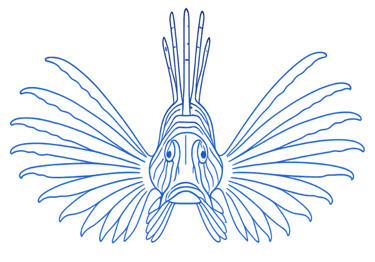
Before they become reef predators, lionfish begin life as tiny wave surfers
After spawning, females release two floating egg sacs that drift with ocean currents, carrying the next generation across vast distances and onto new reefs.
Discover why lionfish are a threat to Caribbean reefs
Download and share our Lionfish Guide (PDF)





© 2026 Turn The Tide Foundation Inc. (TTT), a 501(c)(3) public charity. Donations are tax-deductible to the extent permitted by U.S. law.


© 2026 Turn The Tide Foundation Inc. (TTT), a 501(c)(3) public charity. Donations are tax-deductible to the extent permitted by U.S. law.
We work underwater to actively protect Caribbean reefs from invasive lionfish
Lionfish 101
The Lionfish Threat
Our Approach