THE LIONFISH THREAT
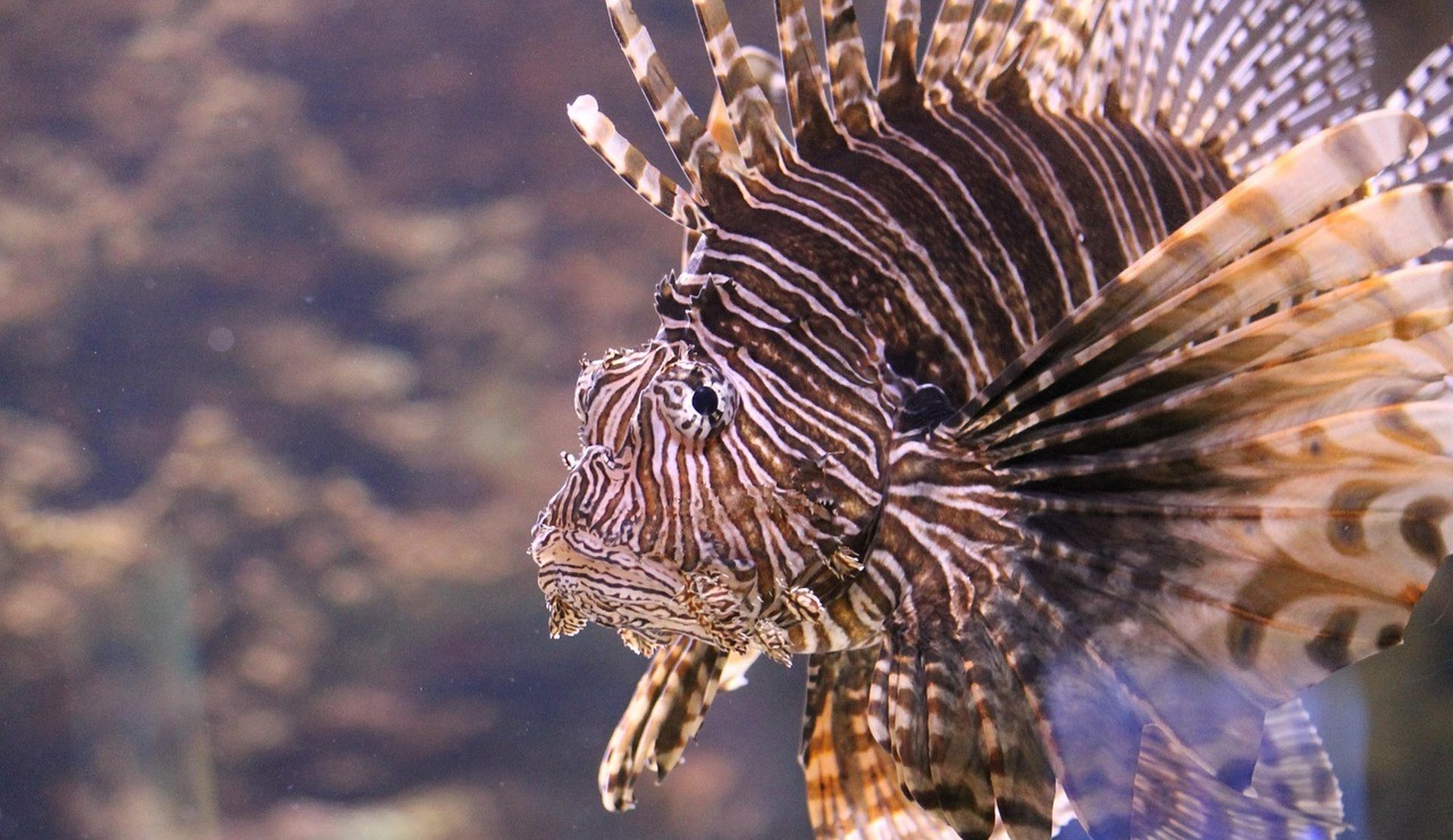
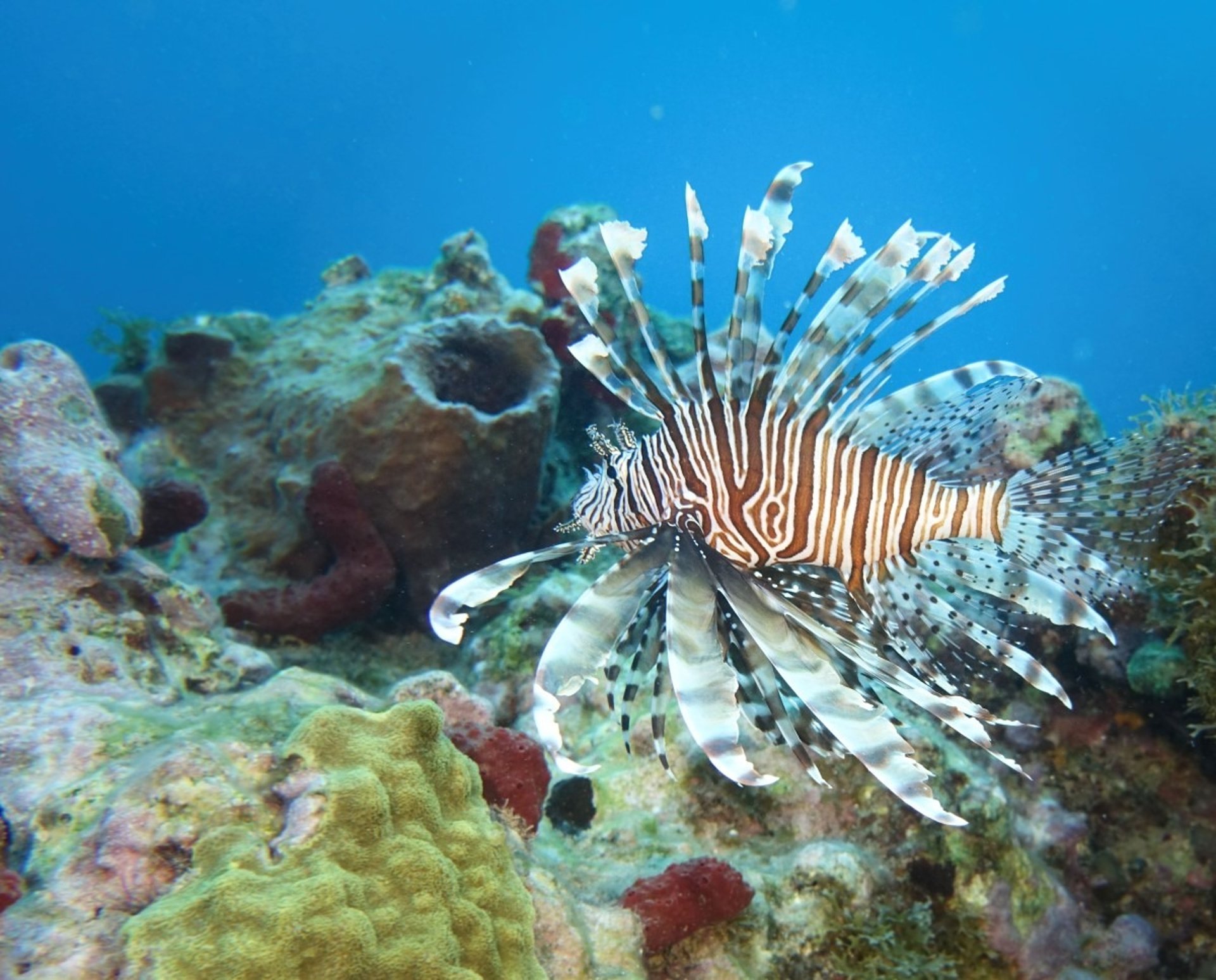
Lionfish consume a wide variety of juvenile reef fish and crustaceans, reducing the number of young fish available to replenish reef populations.
On ecosystems already challenged by warming waters, pollution, and overfishing, this added pressure can be substantial.
A Growing Challenge for Caribbean Reefs
A fast-spreading predator stripping reefs of their next generation


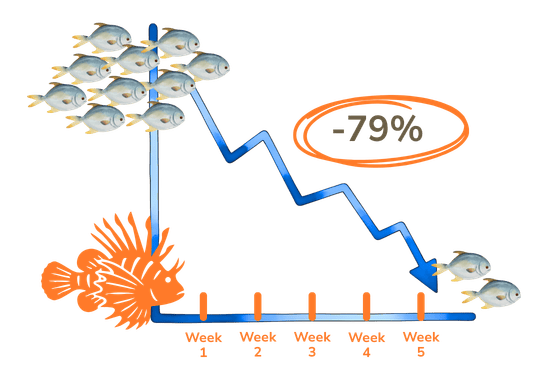
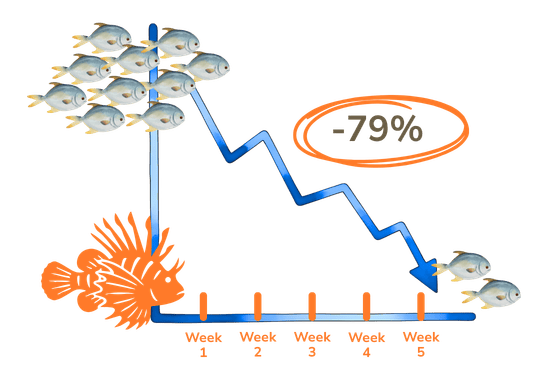
One single lionfish can reduce juvenile reef fish biomass by up to 79% in under 5 weeks on a small reef patch (Albins & Hixon, 2008).
Herbivorous fish make up a large portion of the lionfish diet. These algae-grazing species play a critical role in maintaining healthy reef ecosystems.
Why Herbivores Matters to Reef Conservation
Removing even just ONE Lionfish triggers a domino effect with real benefits for reefs.
The reef depends on its natural gardeners
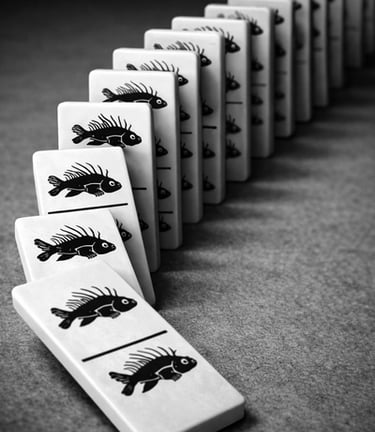
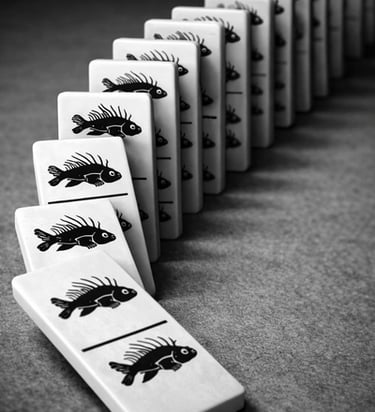
It immediately reduces predation on juvenile reef fish.


More juveniles survive — including herbivores that graze algae.
With algae kept in check, corals can breathe, grow, and recover.
Surviving reef fish and invertebrates can reach maturity and reproduce.
Healthier corals support more shelter, more food, and more native life.
See how lionfish removals benefit reef ecosystems
And millions of lionfish eggs that would have entered the system never exist!


Lionfish predation on herbivores weakens a key natural mechanism that helps keep algae in check.
Herbivorous fish act as the reef's grazing workforce. Without enough grazing fish, algae can overgrow the reef, reducing biodiversity and degrading the habitat that countless reef species depend on.
The impact is local, measurable, and immediate!
Eating more, and doing it in greater numbers than native predators
An Unfair Advantage in the Race for Food
Lionfish consume many of the fish and crustaceans native predators depend on


Lionfish are both voracious predators and highly abundant invaders. While a single lionfish can consume large quantities of prey, the cumulative impact of millions of lionfish across Caribbean reefs is far greater.
This combination of high consumption rates and large populations reduces the prey available to native predators, contributing to their decline.

Native predators such as GROUPERS, SNAPPERS, and JACKS support Caribbean fisheries and contribute to the food security of coastal communities.
Lionfish combine an unusual set of traits that allow them to thrive in invaded waters. They reproduce throughout the year, mature quickly, consume a wide variety of prey, and occupy habitats ranging from shallow coastal waters to deep reefs beyond the reach of most divers.
At the same time, their larvae can travel long distances with ocean currents, helping establish new populations far from their place of origin. In the Caribbean, the absence of effective natural controls further increases their chances of survival.
Individually, each of these characteristics would provide an advantage. Combined, they create a predator exceptionally well equipped to spread, persist, and dominate invaded ecosystems.
Why the Lionfish Invasion Is So Effective
Caribbean waters provide ideal conditions for lionfish to thrive
Rapid Reproduction + Broad Prey Range + No Natural Predators = A HIGHLY EFFECTIVE INVASION
Discover what makes lionfish the ultimate invader in the Caribbean
Few marine invaders possess so many characteristics that favor rapid expansion and long-term survival.
Spread the word, download and share our 101 Lionfish guide (PDF, 4MB)
Caribbean reefs are more than ecosystems—they are economic assets that support millions of people. Healthy reefs help sustain fisheries, attract visitors, and provide income for communities throughout the region.
As lionfish alter reef food webs and contribute to reef degradation, the impacts can extend beyond marine life. Fisheries may face additional pressure as commercially important species lose access to food resources, while declining reef health can affect the diving, snorkeling, and fishing experiences that support tourism economies.
Economic Impact
The consequences extend beyond the reef
Protecting reefs requires collaboration across sectors and communities
Healthy reefs support economies, livelihoods, and food security across the Caribbean.
For many coastal communities, reefs support jobs, fisheries, tourism, and the livelihoods that depend on them. They also play a vital role in food security.
Protecting reef ecosystems is therefore as much an economic challenge as it is an environmental one.


Targeted removals by trained divers remain the most effective way to slow the invasion and give reefs breathing room. But they can’t do it alone. Control only works when the whole system supports it — from sea to shore.
In their own way, everyone can contribute to reef protection
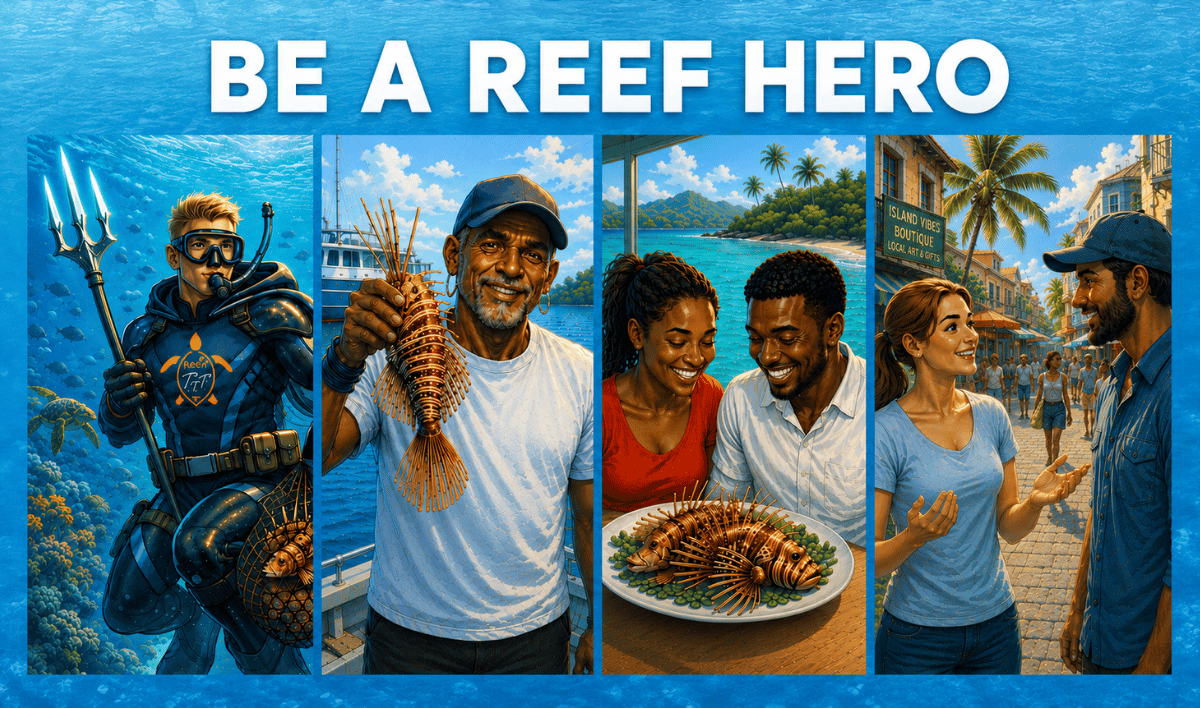
Every Action, Even a Small One Can Make a Difference
DIVER? Learning to safely and responsibly remove lionfish directly reduces pressure on reefs.
FISHER? Landing and sharing lionfish helps create demand and normalize them as a food fish.
RESIDENT OR VISITOR? Choosing lionfish on the menu actively supports control efforts.
If you talk about the issue, you help spread understanding and build long-term awareness.
Whether in the water, on the dock, at the table, or in conversation
EVERY ACTION ADD UP
and together they give reefs a fighting chance
Share our information sheet Lionfish on the Menu highlighting its benefits for reefs, communities, and cuisine.
Lionfish were introduced through human activity. Today, humans are also the only effective predators capable of controlling their numbers in the Caribbean.
Everyone can contribute to reef protection. Find your way to help
A THREAT TO THE REEF
LIONFISH
A Growing Challenge for Caribbean Reefs
Lionfish consume a wide variety of juvenile reef fish and crustaceans, reducing the number of young fish available to replenish reef populations.
On reefs already facing multiple pressures, this additional burden can be substantial.
A fast-spreading predator stripping reefs of their next generation
One single lionfish can reduce juvenile
fish biomass by up to 79% in under 5 weeks on a small reef patch.
(Albins & Hixon, 2008).
Herbivorous fish make up a large portion of the lionfish diet. These algae-grazing species play a critical role in maintaining healthy reef ecosystems.
Why Herbivores Matters
Lionfish predation on herbivores weakens a key natural mechanism that helps keep algae in check.
It immediately reduces predation on juvenile fish.

More juveniles survive — including herbivores that graze algae.
With algae kept in check, corals can breathe, grow, and recover.
Surviving fish and invertebrates can reach maturity and reproduce, supporting coral reefs populations.
Healthier corals support more shelter, food, and reef life.
The impact is local, measurable, and immediate
And millions of lionfish eggs that would have entered the system never exist!

The reef depends on its natural gardeners
Removing even just ONE lionfish triggers a domino effect with real benefits for reefs.
Herbivorous fish act as the reef's grazing workforce. Without enough grazing fish, algae can overgrow the reef, reducing biodiversity and degrading the habitat that countless reef species depend on.
See how lionfish removals benefit reef ecosystems


Eating more, and doing it in greater numbers than native predators
An Unfair Advantage in the Race for Food
Lionfish consume many of the preys native predators depend on

Lionfish are both voracious predators and highly abundant invaders. While a single lionfish can consume large quantities of prey, the cumulative impact of millions of lionfish across Caribbean reefs is far greater.
This combination of high consumption rates and large populations reduces the prey available to native predators, contributing to their decline.

Native predators such as GROUPERS,
SNAPPERS, and JACKS support Caribbean fisheries and contribute to the food security of coastal communities.
Rapid Reproduction
+ Broad Prey Range
+ No Natural Predators
= A HIGHLY EFFECTIVE INVASION
Why the Lionfish Invasion is so Effective
Caribbean waters provide ideal conditions for lionfish to thrive
Many advantages. Few limitations. The odds are stacked in their favor.
Lionfish reproduce year-round, mature quickly, consume a wide variety of prey, and occupy habitats from shallow coastal waters to deep reefs. Their larvae can travel long distances with ocean currents, while the absence of effective natural controls further favors their expansion.
Together, these traits make lionfish exceptionally successful invaders.
Discover the traits behind the invasion
Download and share our 101 Lionfish guide (pdf)
Caribbean reefs are more than ecosystems—they are economic assets that support millions of people. Healthy reefs help sustain fisheries, attract visitors, and provide income for communities throughout the region.
Economic Impact
More consequences beyond the reef
Reef protection depends on collaboration
Healthy reefs support economies, livelihoods, and food security across the Caribbean.
Many coastal communities depend on healthy reefs for food, income, and livelihoods. Protecting reefs means protecting people.

As lionfish alter reef food webs and contribute to reef degradation, the impacts can extend beyond marine life. Fisheries may face additional pressure as commercially important species lose access to food resources, while declining reef health can affect the diving, snorkeling, and fishing experiences that support tourism economies.
Today, humans are the only effective means of controlling lionfish in the Caribbean.
Everyone can play a role in protecting Caribbean reefs
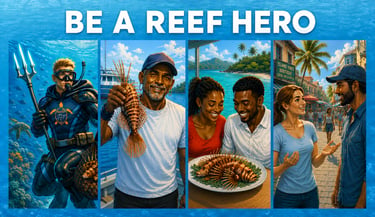
Be Part of the Solution
• Divers — Learn safe and responsible lionfish removal.
• Fishers — Help create demand by landing and sharing lionfish as food.
• Residents & Visitors — Choose lionfish when it's on the menu.
• Advocates — Help raise awareness by sharing what you've learned.
Underwater, on the dock, at the table
EVERY ACTION ADDS UP
and helps give reefs a fighting chance
Encourage restaurants to serve lionfish. Share our Lionfish On The Menu sheet
See how you can take action to protect reefs
Targeted removals by trained divers remain the most effective way to reduce their impact on reefs. But lasting control depends on action beyond the dive.
© 2026 Turn The Tide Foundation Inc. (TTT), a 501(c)(3) public charity. Donations are tax-deductible to the extent permitted by U.S. law.
© 2026 Turn The Tide Foundation Inc. (TTT), a 501(c)(3) public charity. Donations are tax-deductible to the extent permitted by U.S. law.
We work underwater to actively protect Caribbean reefs from invasive lionfish
Lionfish 101
The Lionfish Threat
Our Approach